
Granite & Bluestone Steps Built to Last in RI & MA
Solid stone steps set on stable footings, level, safe and heave-proof through every winter.
Or call (401) 258-1789
Stone Steps
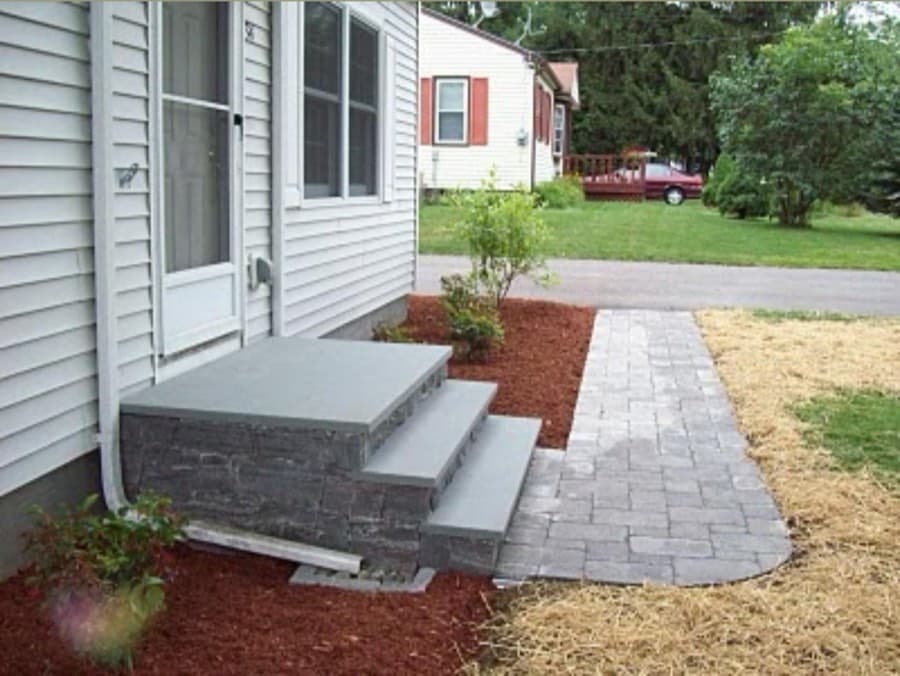
Steps are where safety and craft meet, because an uneven riser or a heaved tread is not just ugly, it is a fall waiting to happen. In Rhode Island and Massachusetts, steps take the full force of freeze-thaw, so the ones that stay level for decades are the ones set on stable, well-drained footings from the start. Levi Construction builds granite and bluestone steps, solid slab treads and stacked stone risers, set on compacted, draining bases so each step stays true and safe through every winter. Airton, the owner, sets each step by hand, keeping the risers even and the treads pitched to shed water and ice. Whether it is a short front stoop, a run up a sloped yard, or steps woven into a patio and walkway, we build them to code-comfortable dimensions and lasting stability. With 6 years of stonework across RI and MA, we build steps you trust underfoot.
Stone steps are a stacked or slab assembly where each step transfers load to the one below and ultimately to a stable base or footing. Solid granite slab steps are single pieces of stone, heavy and self-stable, set on a compacted gravel base. Built-up steps use stone risers with bluestone or granite treads on top. In either case, consistent riser height and tread depth are what make a run feel safe, and a slight pitch on each tread sheds water so it does not pool and freeze. Because frost is the enemy, the base has to drain and sit deep enough that heave cannot tilt the run.
Signs You Need Stone Steps
- Existing steps are uneven, cracked, wobbly or a trip hazard
- You need steps up a sloped front yard or between grade changes
- A concrete stoop has cracked, spalled or pulled away from the house
- You want stone steps to match a new patio, walkway or wall
- The current steps have heaved and no longer sit level after winters
- You want a safe, code-comfortable rise on an entry or garden run
Materials & Options
- Solid granite slab steps (single-piece treads)
- Bluestone treads on stone risers
- Stacked fieldstone risers
- Granite block steps
- Cobblestone accents and landings
- Compacted draining base and footing below frost
How We Do It
- 01
Measure the rise and run
We measure the total elevation change and lay out even risers and comfortable treads, then give a free estimate with stone options and step count.
- 02
Excavate and base
We dig the base for the bottom step below frost depth and compact a draining gravel pad, since the whole run rests on that first stable step.
- 03
Set each step level
We set solid slabs or build risers and treads one at a time, keeping every riser the same height and pitching each tread slightly so water and ice shed off.
- 04
Tie into grade and hardscape
We connect the steps to the walkway, patio or wall, backfill and grade the sides, and add landings or cobble accents where they belong.
- 05
Safety check and cleanup
We confirm the run is level, even and solid underfoot, clean up the site, and walk it with you.
Why Homeowners Choose Levi Construction
Even risers, safe run
We lay out consistent riser heights and comfortable treads, so the steps feel safe and predictable underfoot instead of catching people off guard.
Set to resist frost
The base sits below the frost line and drains, so RI and MA freeze-thaw cannot tilt or heave the run out of level.
Solid stone, set by the owner
Airton sets each granite or bluestone step by hand. Solid stone and careful setting are what keep the steps stable for decades.
Stone Steps: Common Questions
Almost always frost heave. When steps sit on a shallow or poorly draining base, water freezes underneath and lifts them unevenly, so risers end up different heights and treads tilt. We set the base below the frost line and use draining gravel, so the run stays level. On solid granite slabs, the weight and stable base together resist movement.
For longevity in New England, solid granite is hard to beat. It is one dense piece of stone with no seams to crack or spall the way a poured concrete stoop does after years of salt and freeze-thaw. Granite steps also read as high-end and can last generations. Concrete has a lower upfront cost but a shorter life in this climate.
Yes, and we often do. We use the same or complementary stone, such as bluestone treads to match a bluestone patio, so the steps read as part of the overall design. Building them together also keeps grades and drainage consistent where the steps meet the hardscape.
Cost typically ranges with the number of steps, the total rise, and whether you choose solid granite slabs or built-up stone with treads. Solid slab steps carry a higher material cost but a very long life. We give a free on-site estimate based on your actual rise and stone choice.
Sometimes. If the base is sound, we can reset heaved treads and even out risers. If frost has repeatedly moved the run because the base was never right, the lasting fix is rebuilding on a proper draining base. We assess which path makes sense during the free estimate.
Get Your Free Stone Steps Estimate
Serving Rhode Island and Eastern Massachusetts. The owner is on every job.