
Pavers vs Concrete Driveway: Which Is Better in Rhode Island?
· By Airton da Silva Soares
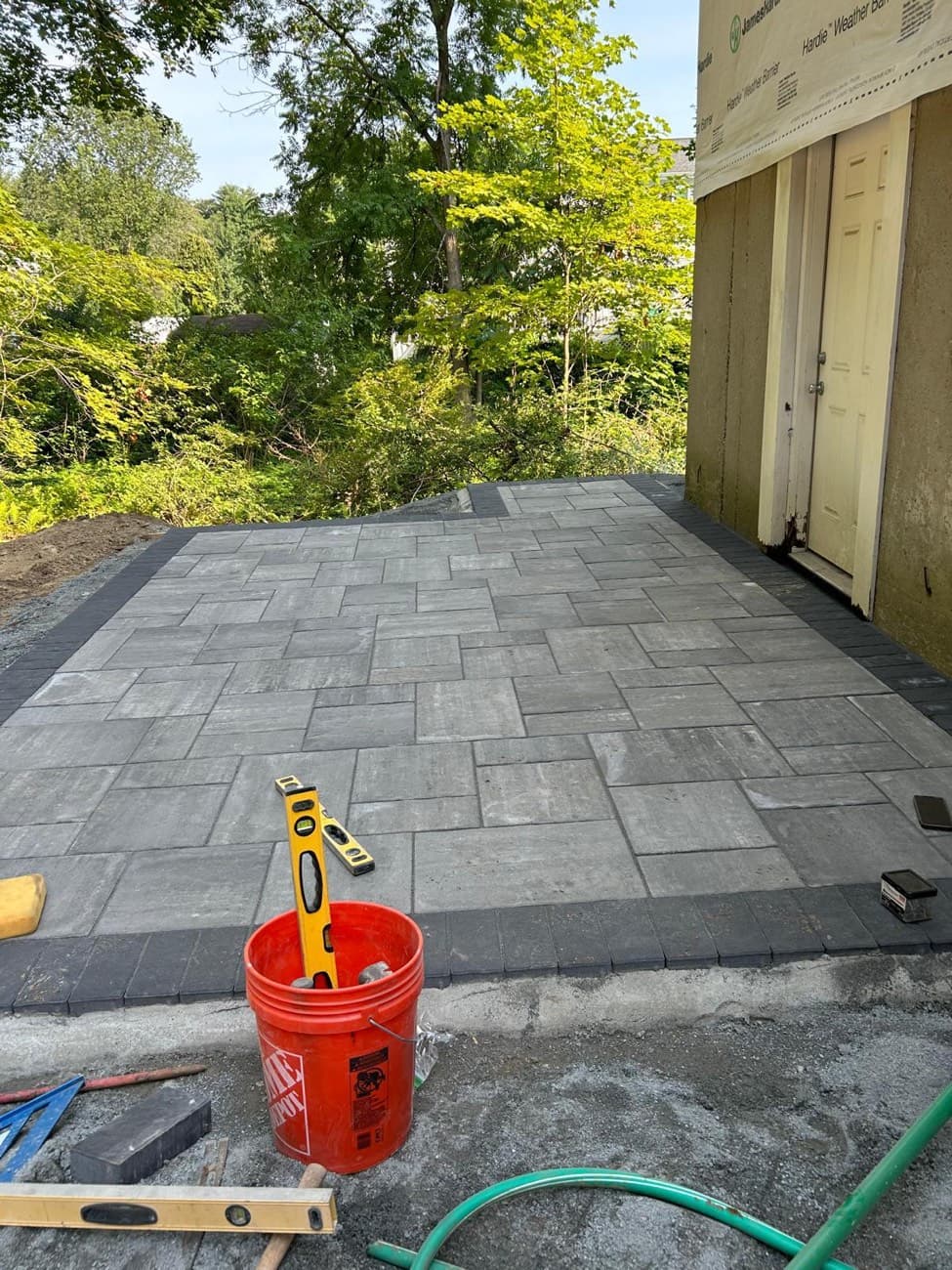
A driveway is one of the biggest hardscape decisions you will make for your home, and in Rhode Island the choice usually comes down to pavers or poured concrete. Both can look great on day one. The real question is which one still performs and looks right after several New England winters.
This comparison focuses on what actually matters here: how each surface handles freeze-thaw cycles, what they cost, how they age, and how they get repaired when something goes wrong. The answer is not the same for every home, so the goal is to help you match the surface to your property and budget.
At Levi Construction we build both, and I am on site for the work across RI and MA. That means I have no reason to push one over the other. What follows is the same rundown I give homeowners when they ask me to be straight with them.
How Each Surface Handles Rhode Island Winters
The deciding factor in New England is freeze-thaw. Water gets into the ground and into any small crack, freezes, expands, and pushes upward. Poured concrete is a single rigid slab, so when the ground moves, the slab has nowhere to go but crack. Once a concrete driveway cracks, water gets in faster, and the next winter usually makes it worse.
Pavers are individual units set on a flexible, compacted base. When the ground shifts, the pavers move slightly with it instead of fracturing. That flexibility is the main reason interlocking paver driveways tend to hold their look longer in Rhode Island than poured slabs.
De-icing also matters. Repeated salt and freeze cycles can pit and scale a concrete surface over the years. Quality pavers are manufactured to resist that wear, which helps them stay presentable through the winters we actually get here.
Up-Front Cost
On price, concrete usually wins the first round. A poured concrete driveway typically costs less per square foot to install than a paver driveway, which is a real consideration on a large surface like a driveway.
Paver driveways cost more up front because there is more material and more labor. The base has to be built deeper and stronger to carry vehicle weight, and each paver is set by hand. Installed paver driveway pricing varies widely by size, paver, and site prep, so a free on-site estimate is the only way to pin down your number.
The right way to think about cost is over the life of the driveway, not just the install day. A cheaper surface that needs replacing sooner is not always the cheaper surface. That is where the next few points come in.
Repairs and Maintenance
This is where pavers pull ahead. If a paver driveway ever settles or a few units get stained or damaged, we lift and reset or swap just that area. When we are done, you often cannot tell where the repair was, because the pavers match the rest.
Concrete does not offer that. A crack cannot be truly repaired, only patched, and patches rarely blend in. When a concrete driveway fails badly enough, the fix is usually to tear it out and pour again, which is a full-cost project.
Both surfaces benefit from simple upkeep. Pavers do best with joint sand refreshed over time and an occasional sealant depending on the product. Concrete benefits from sealing and prompt crack attention. Neither is maintenance-free, but pavers give you far more forgiving repair options.
Curb Appeal and Resale
A paver driveway is a design feature. You choose color, pattern, and border, and the result reads as a deliberate upgrade the moment someone pulls up. In neighborhoods across Providence, Cranston, and Warwick, a well-built paver driveway sets a home apart.
Concrete can look clean and modern when new, but the palette is limited and it tends to look more utilitarian over time, especially as it weathers and stains. For homeowners thinking about resale, the visual difference is worth weighing.
If your goal is the strongest first impression and you plan to stay a while or sell into a design-conscious market, pavers usually deliver more of what buyers notice. If the driveway is purely functional and budget is tight, concrete can be a sensible call.
The Base Is What Really Decides the Winner
Here is the part that matters more than the surface choice: the base. A paver driveway built on a shallow or poorly compacted base will still fail in New England, and a concrete slab poured without proper subgrade prep will crack faster. The material on top only performs as well as the foundation under it.
For a driveway carrying cars and sometimes heavier vehicles, we excavate to solid ground and build up a compacted crushed-stone base, compacted in layers so it does not settle later. Drainage gets planned so water runs away from the driveway and your foundation rather than pooling and freezing.
When you compare bids, ask each contractor about base depth, compaction, and drainage. A low price often means a thinner base, which is exactly the corner you do not want cut on a Rhode Island driveway.
Which One Is Right for You
If you want the longest-lasting look, easy repairs, and strong curb appeal, and the budget allows, pavers are usually the better fit for Rhode Island conditions. If up-front cost is the top priority and the driveway is purely practical, a properly built concrete driveway can serve you well for years.
The honest answer is that both can be a good choice when the base and drainage are done right. What you want to avoid is a cheap install of either one. Levi Construction builds both across RI and MA with the owner on site, and a free estimate is the simplest way to see real numbers for both options side by side.
Frequently asked questions
- Is a paver or concrete driveway better for Rhode Island winters?
- Pavers generally handle freeze-thaw winters better because they flex with the ground instead of cracking like a rigid concrete slab. Both perform well only when built on a deep, properly compacted base with good drainage.
- Are paver driveways more expensive than concrete?
- Yes, paver driveways usually cost more up front than poured concrete because of extra material, a deeper base, and hand-set installation. Over the life of the driveway, easier repairs and longer good looks can offset that difference.
- Can you repair a paver driveway without replacing it?
- Yes. Because pavers are individual units, we can lift and reset a settled area or swap damaged pavers without touching the rest. A cracked concrete driveway usually cannot be repaired invisibly and often needs full replacement.
- How long does a paver driveway last?
- A paver driveway built on a strong, compacted base can last for decades in Rhode Island. Longevity comes down to the base and drainage far more than the pavers themselves.
Related services
Ready for an exact price?
Get a free, no-pressure in-home estimate. Real numbers for your home, not a phone guess.