
Natural Stone vs Pavers for Walkways: How to Choose
· By Airton da Silva Soares
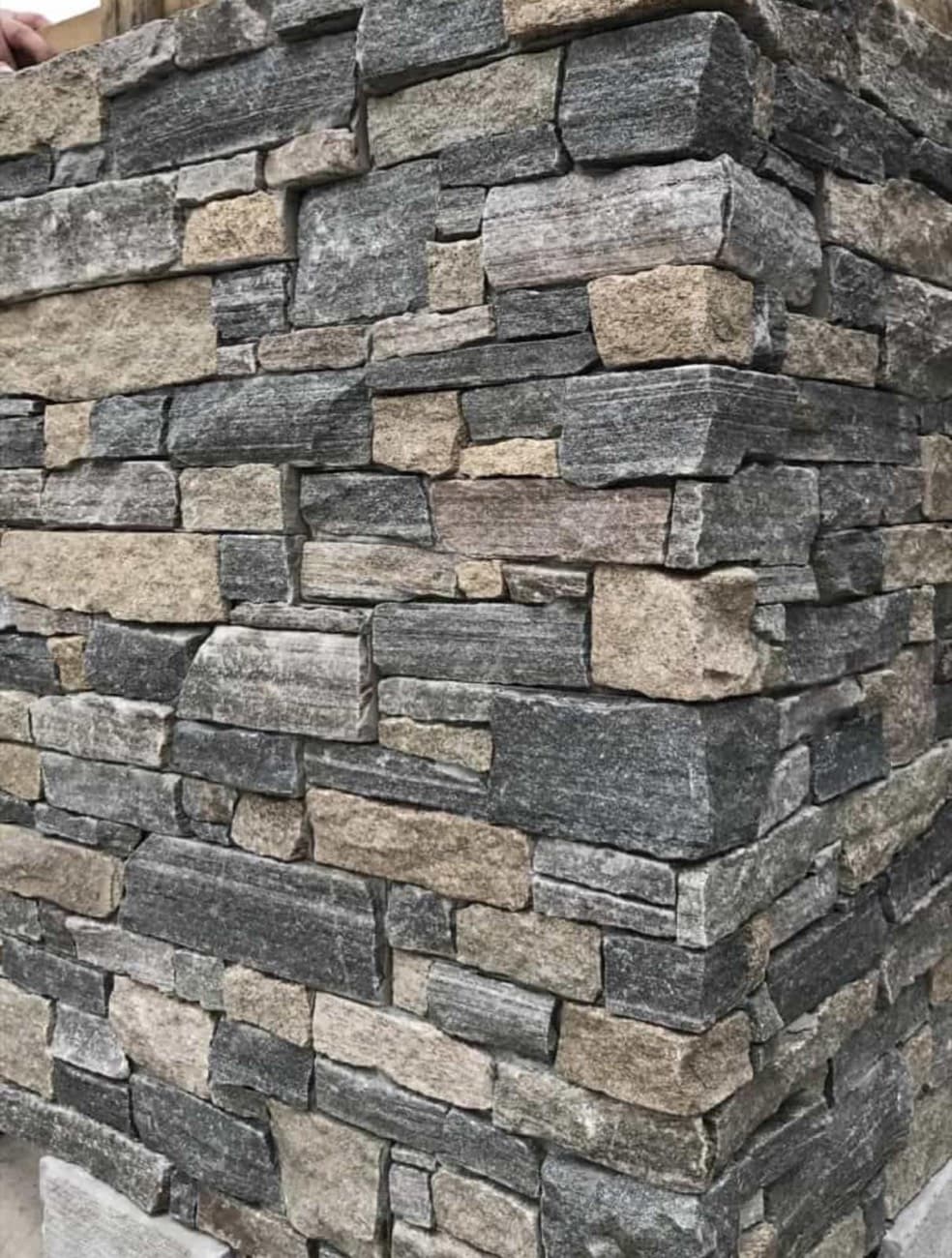
When a homeowner asks me to build a front walkway, the first real decision is material: natural stone or pavers. Both make a beautiful, long-lasting path, and both are excellent choices for the freeze-thaw climate we deal with across Rhode Island and Massachusetts. They just get there in different ways, with different price tags and different personalities.
Natural stone means real quarried material like bluestone, granite, or fieldstone, each piece unique. Pavers means manufactured units, usually concrete, made in consistent shapes and colors. Neither is simply better. The right answer depends on your budget, the look you want, and how much variation you are comfortable with.
This guide lays out the honest trade-offs so you can walk into a conversation with any contractor knowing what matters. I am Airton, and I install both, so I have no reason to push you toward one over the other. I would rather build the walkway that fits your home.
The short answer
If you want the highest-end, most timeless look and you have room in the budget, natural stone like bluestone or granite is hard to beat, and it tends to age gracefully. If you want a durable, clean, cost-conscious walkway with a huge range of styles and easy repairs, concrete pavers are the practical workhorse.
Both, installed correctly on a proper compacted base, will handle New England winters for decades. The failures I get called to fix are almost never about the material choice. They are about a base that was too thin or drainage that was ignored. Material matters for looks and budget; installation matters for longevity.
Read on for the specifics, because the difference between the two shows up most clearly in four areas: cost, appearance, maintenance, and repairability.
Cost: what drives the price difference
As a general rule, natural stone costs more than concrete pavers, both in material and in labor. Real stone varies in thickness and shape, so it takes more skilled cutting and hand-fitting to set it cleanly, which adds time. Pavers arrive in uniform sizes that go down faster and more predictably.
Actual pricing depends heavily on the stone you choose, the pattern, the site conditions, and how much prep and drainage the job needs, so I always give a specific number after seeing the property. As a rough market picture, expect natural stone to sit at the higher end of the range and standard concrete pavers to be the more budget-friendly option, with premium paver lines closing part of that gap.
One cost note in our favor: because pavers are modular, small repairs down the road are cheap and easy. Natural stone repairs can cost more per square foot if a piece needs to be sourced to match. Factor lifetime cost, not just install day, into the decision.
Appearance and design flexibility
Natural stone has a depth and character that manufactured products imitate but never fully match. No two pieces of bluestone or fieldstone are identical, so a stone walkway reads as genuine and often suits older, traditional New England homes beautifully. If you want that organic, quarried look, stone delivers it.
Pavers win on variety and consistency. You can choose from a wide range of colors, shapes, textures, and laying patterns, and because the units are uniform, you get crisp, repeatable lines that work well with contemporary and transitional homes. Manufacturers also offer tumbled and textured pavers that convincingly echo old stone.
Think about the whole property, not just the walkway. The best result ties the path to the house, the driveway, and any patio. Sometimes that points to stone, sometimes to pavers, and sometimes to a blend, such as a paver field with a natural stone border.
Durability and freeze-thaw performance
Both materials are strong, but they handle stress differently. Dense natural stones like granite are extremely hard and shrug off wear. Bluestone is popular and durable but can be more sensitive to harsh de-icing salts, which may cause surface flaking over many winters if the wrong products are used.
Quality concrete pavers are engineered for freeze-thaw and are highly resistant to cracking because the many joints let the surface flex with ground movement instead of cracking like a solid slab. Their main long-term concern is surface color fade and, in cheaper products, some wear, both of which better paver lines minimize.
The deciding factor for both is the base. In our climate, a walkway needs an excavated, well-compacted gravel base and good drainage so water does not sit and heave the path in winter. Get the base right and either material lasts. Skimp on it and neither will.
Maintenance and repairs
Maintenance is broadly similar: keep the surface clean, keep the joints filled, and manage moss and weeds. Both benefit from occasional sealing, though many homeowners leave natural stone unsealed for a more natural patina. For winter, both do best with paver-safe or stone-safe de-icers rather than rock salt.
Repairs are where pavers pull ahead. If a paver stains badly or a section settles, you lift the affected units, fix the base, and reset the same pavers, often invisibly. It is one of the biggest practical advantages of a modular system.
Natural stone repairs are very doable but can be more involved, since matching a replacement piece to the existing color and thickness takes more effort. If low-fuss future repairs rank high for you, that is a real point in the pavers column.
How to choose for your home
Start with budget and be honest about it. If premium natural stone stretches you thin, a high-quality paver will look great and free up money for a wider path, better lighting, or nicer plantings, which often improve the entrance more than the material alone.
Then match the style of your house. Historic and traditional homes around Providence and Warwick often shine with natural stone, while newer construction frequently pairs well with clean paver patterns. Bring photos of your home to any estimate so the recommendation fits reality.
Finally, weigh how much you value uniqueness versus consistency and easy repairs. There is no wrong answer here, only the one that fits your priorities. When I walk a property, I lay both options next to the house and let the homeowner see them in context before deciding.
Frequently asked questions
- Which lasts longer, natural stone or pavers?
- Both can last for decades in New England when installed on a proper compacted base with good drainage. Longevity is driven more by installation quality than by the material itself. Dense stones like granite are extremely hard, and quality concrete pavers are engineered to resist freeze-thaw cracking.
- Are pavers cheaper than natural stone?
- Generally yes. Standard concrete pavers typically cost less than natural stone in both material and labor because they are uniform and install faster. Premium paver lines narrow that gap. Final pricing depends on the material, pattern, and site conditions, so a specific estimate is best.
- Do natural stone walkways handle winter salt?
- Some do better than others. Granite is very salt tolerant, while bluestone can be more sensitive to harsh de-icers over many winters. With either material, using a stone-safe or paver-safe de-icer instead of rock salt protects the surface.
- Can I mix stone and pavers on one walkway?
- Absolutely, and it is a popular look. A common approach is a paver field with a natural stone border, which controls cost while adding a high-end accent. It is a good way to tie the walkway to both the home and an existing patio or driveway.
Ready for an exact price?
Get a free, no-pressure in-home estimate. Real numbers for your home, not a phone guess.