
How Frost Heave Damages Hardscape (and How to Prevent It)
· By Airton da Silva Soares
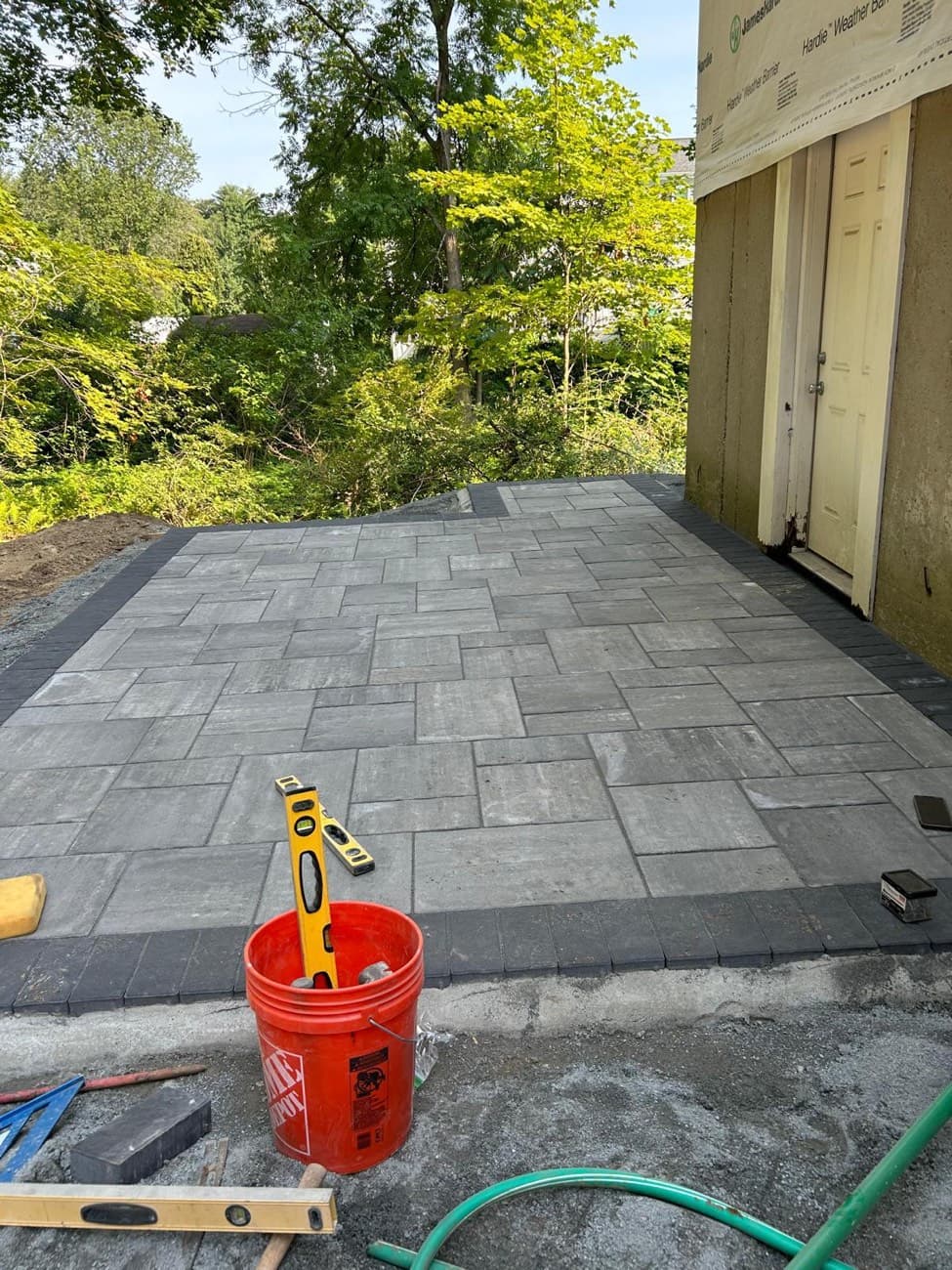
If you have ever seen a walkway that heaved up over one winter, a patio that suddenly has a low corner, or a set of steps that no longer sit level, you have probably met frost heave. It is the single biggest reason hardscape fails in New England, and almost every one of those failures traces back to the same thing: what happened, or did not happen, below the surface.
The frustrating part is that frost heave damage rarely comes from bad pavers or bad stone. It comes from a base that was too thin, poorly compacted, or built on soil that holds water, so the ground itself moves in winter and takes the hardscape with it. The material on top gets blamed for a problem that started underground.
This guide explains how frost heave actually works, what it does to patios, walkways, and walls, and the specific steps that prevent it. I am Airton, and I build hardscape across Rhode Island and Massachusetts, where every project has to survive freeze-thaw. Preventing heave is most of the job, and it all happens before the first paver goes down.
What frost heave actually is
Frost heave is ground movement caused by freezing water in the soil. When soil that holds moisture freezes, the water in it turns to ice and expands. In the right conditions, thin layers of ice called ice lenses form and grow, lifting everything above them. When the ground thaws, it settles back down, but rarely to exactly where it started.
Repeat that cycle through a New England winter, freeze, thaw, freeze, thaw, and the ground under your hardscape is in slow motion the whole season. Anything sitting on that ground gets pushed up and dropped back down unevenly, which is why a heaved walkway often ends up worse than before rather than returning to level.
Three ingredients are needed for frost heave: freezing temperatures, water in the soil, and frost-susceptible soil that holds that water. We cannot change the temperature, but we can absolutely control water and soil, and that is exactly where good hardscape construction wins.
The frost line and why depth matters
The frost line is how deep the ground freezes in winter, and in New England it can reach several feet down. Anything that needs to stay rock-solid, like footings for a structure, is set below the frost line so freezing soil cannot lift it.
Most patios and walkways are not built on deep footings, so they are designed to move a little and, more importantly, to sit on a base that drains and does not hold the water that feeds heave. Steps, pillars, and structural walls, on the other hand, benefit from footings that reach appropriate depth so they stay put.
The practical lesson is that fighting frost heave is about managing the freezing zone, not pretending it is not there. Either you get below it, or you build a base within it that stays free-draining so there is little water to freeze and lift in the first place.
How frost heave damages patios and walkways
On a paver patio or walkway, frost heave shows up as unevenness: pavers that rock underfoot, a corner that has risen or dropped, joints that have opened up, and edges that no longer line up. Once one area moves, water pools there, which feeds even more heave the following winter in a worsening loop.
A poured concrete slab reacts worse in some ways, because it is rigid. When the ground under one part heaves and another part does not, the slab has nowhere to flex and cracks. Pavers at least move as individual units, which is why a properly built paver surface tolerates our climate better than a slab.
Either way, the trip hazard and the eyesore both come from the same root cause. If the base under the surface holds water and the water freezes, the surface will move. Fix the base and the surface stays put.
How frost heave damages walls and steps
Retaining walls are especially vulnerable, because they already hold back soil and water. When water collects behind a wall and freezes, it expands and pushes the wall outward, which is how walls start to bulge, lean, or crack over a few winters. This is why drainage behind a wall is not optional in New England.
Steps and stoops heave when the soil beneath them freezes and lifts unevenly, leaving treads that no longer sit level or a top step that has separated from the house. Because people rely on steps being even, heaved steps are both a nuisance and a genuine safety risk.
Freestanding stone walls and pillars can also shift and open at the joints as the ground moves under them. In all these cases the pattern is the same: water in the soil, freezing, expansion, movement. Control the water and you control the damage.
How to prevent frost heave: base and drainage
Prevention starts with excavation. You dig out the soft topsoil and any water-holding clay to the right depth, which is deeper than many homeowners expect, so the hardscape sits on a stable, engineered base rather than on native soil that heaves.
Then you build a compacted gravel base, added and compacted in layers rather than dumped all at once, to a thickness suited to the use, with more depth for driveways and heavy loads than for a garden path. Well-graded, angular crushed stone drains freely and locks together, which is exactly what resists heave. Skipping compaction is one of the most common causes of early failure.
Finally, you manage water. That means grading so water runs away from the hardscape, a free-draining base so water does not sit under it, and, behind walls, a gravel drainage zone with a pipe that carries water off. Less water in the soil under and behind your hardscape means far less to freeze, expand, and lift.
Why hiring for the base matters more than the surface
Homeowners naturally focus on the visible part, the pavers, the stone, the pattern, because that is what they see. But the part that determines whether your project survives ten New England winters is the part you never see once the job is done. The base and drainage are the whole ballgame.
This is also where corners get cut on cheap installs, because a thinner base and skipped compaction save time and money on install day and the failure does not show up until the first hard winter, long after the crew is gone. It is the classic hidden shortcut.
When you evaluate any hardscape quote, ask specifically about excavation depth, base thickness, compaction, and drainage. A contractor who talks confidently about those things is protecting you from frost heave. On my jobs, that below-ground work is where I spend the most care, because it is what keeps the project level for years.
Frequently asked questions
- What causes frost heave in hardscape?
- Frost heave happens when water in the soil freezes, expands, and lifts whatever sits above it, then settles unevenly on thaw. It needs freezing temperatures, water in the soil, and frost-susceptible soil. Controlling water and building on a free-draining compacted base is how you prevent it.
- Can frost heave be fully prevented?
- You cannot stop the ground from freezing, but you can prevent the damage. A proper excavation, a thick well-compacted free-draining gravel base, good grading, and drainage behind walls remove most of the water that feeds heave, which is what keeps hardscape level through New England winters.
- Why do my pavers keep shifting every winter?
- Recurring shifting almost always points to a base problem: too thin, poorly compacted, or built over water-holding soil that heaves. Adding sand on top only hides it for a season. The lasting fix reaches the base, so it drains and stays stable through freeze-thaw.
- How deep should a hardscape base be in New England?
- It depends on the use, with driveways and heavy loads needing more depth than a garden path. The key is excavating out soft or clay soil and building a compacted gravel base in layers on top. A specific depth is set per project based on the soil and load, which is part of a proper site assessment.
Ready for an exact price?
Get a free, no-pressure in-home estimate. Real numbers for your home, not a phone guess.