
Hardscaping in Warwick, RI: A Local Homeowner's Guide
· By Airton da Silva Soares
Warwick has one of the longest coastlines in Rhode Island, and that water is never far from a backyard project. From the bayside neighborhoods of Conimicut and Oakland Beach to the inland stretches around Apponaug and Cowesett, the city is a patchwork of villages, each with its own lot sizes, soils, and exposure to weather off the bay.
This guide is for Warwick homeowners still planning a patio, walkway, or wall. It covers the neighborhoods and how they shape a build, the house styles common here, the soil and coastal climate you are working with, the materials that stand up to it, and the permit and hiring basics.
It is informational rather than a sales pitch. When you are ready for numbers on your own property, Levi Construction offers free estimates across Warwick and the rest of Rhode Island and Massachusetts.
Warwick villages and how they shape a project
The shoreline neighborhoods, including Conimicut, Oakland Beach, Longmeadow, and Buttonwoods, sit right on Narragansett Bay. Lots here can be smaller and closer together, exposure to wind and salt air is real, and drainage toward the water has to be handled thoughtfully. Compact patios, sturdy walkways, and sitting walls that take the weather well are the smart moves.
Inland, the areas around Apponaug, Cowesett, and Potowomut are more suburban with larger lots and more room to work. Here you can build bigger patios, full outdoor living areas, and longer driveways, and equipment access is usually easier than in the tight coastal streets.
Central Warwick around Norwood, Hoxsie, and Warwick Neck falls in between, with established mid-century subdivisions and generally workable yards. Knowing which part of this spread-out city you are in shapes both the design and how the work has to be staged.
House styles in Warwick and the hardscape that fits
The bayside cottages and older homes in neighborhoods like Conimicut and Oakland Beach have a relaxed, coastal character. Warm-toned pavers and natural stone suit them, and slightly textured surfaces feel right at home near the water while giving solid footing.
Central Warwick is full of the ranches, Capes, and split-levels that went up mid-century in Norwood, Hoxsie, and Gaspee. Clean concrete pavers in neutral colors complement these homes and provide a low-maintenance, durable surface for a family backyard.
The larger colonials and newer homes around Cowesett and Potowomut can carry bigger design statements: large-format pavers, defined outdoor rooms, and modern wall systems. Whatever the style, the goal is a material and color that belong with the house and, near the coast, that shrug off salt air and sun.
Warwick soil, coastal drainage, and the climate
Warwick soils are the rocky, glacial mix typical of Rhode Island, though the coastal neighborhoods can also have sandier ground closer to the bay. Sandy soil drains fast, which is good, but it can also shift, so a properly compacted gravel base is what keeps a surface stable rather than relying on the native ground.
Drainage near the shoreline needs care. Lots close to the bay have to move water away from the house and toward appropriate outlets without eroding, and low-lying spots can hold water in heavy rain. Correct pitch and a permeable base keep patios from staying wet and keep runoff under control.
The freeze-thaw cycle affects all of Warwick, coast and inland alike. Repeated freezing and thawing lifts anything built on a thin or poorly compacted base, and near the water, salt in the air is one more reason to choose durable materials and build them right. A deep, well-compacted base and the correct joint material are what carry a Warwick patio through winter intact.
Materials that hold up well in Warwick
Concrete pavers are the practical favorite for Warwick patios and walkways. They flex with freeze-thaw instead of cracking, resist the wear of coastal weather, and can be lifted and reset individually if a section settles, which is handy on the sandier bayside lots.
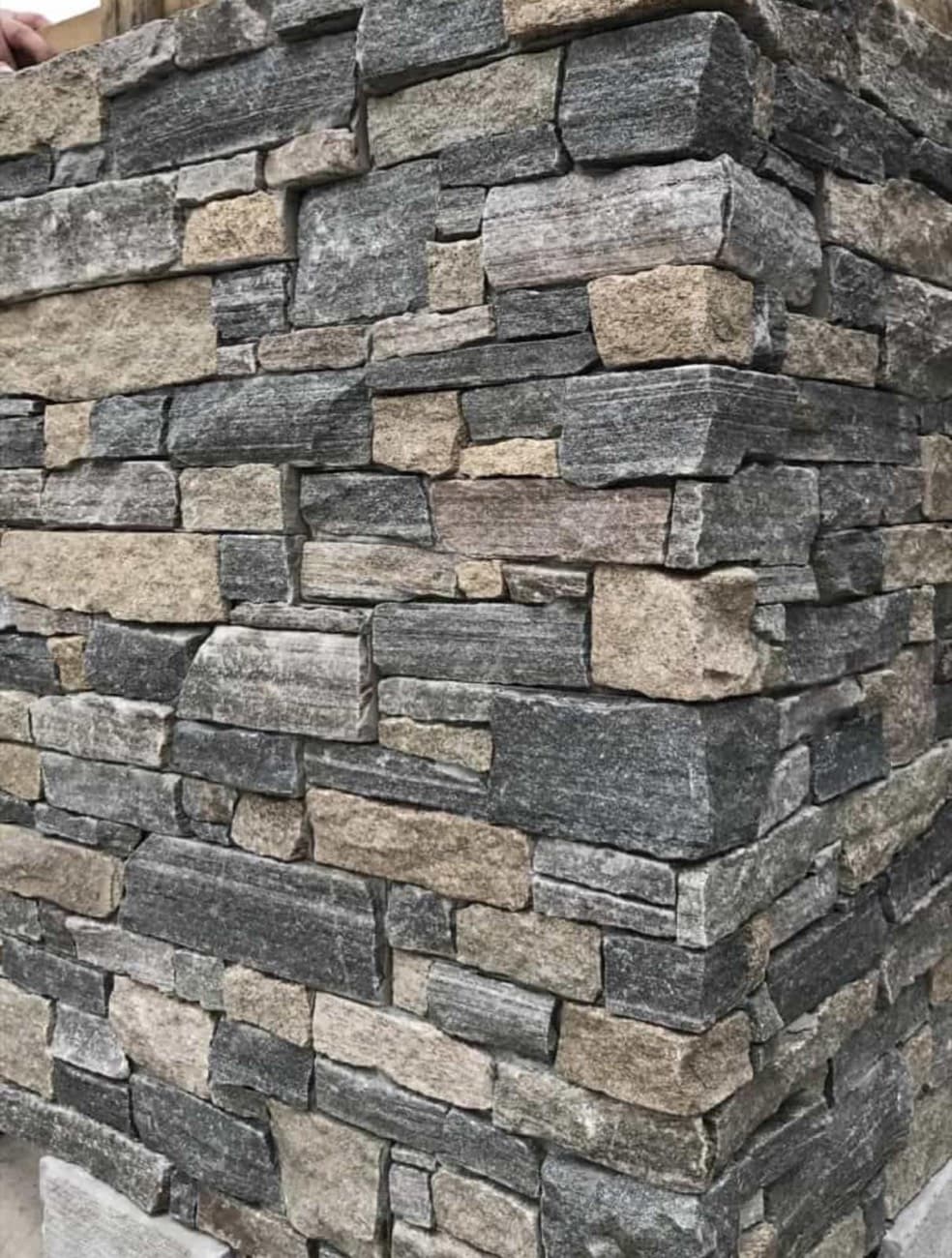
Natural stone, especially granite and bluestone, is extremely durable and holds up well to salt air and sun, making it a strong choice for shoreline homes that want a higher-end, long-lasting look. Granite and fieldstone are also the traditional materials for the stone walls and sitting walls common around Warwick's older neighborhoods.
For sloped inland lots around Cowesett and Warwick Neck, segmental retaining wall block is engineered for soil and frost pressure, while natural stone gives a more traditional face. On every surface, near the water especially, the compacted base and edge restraint underneath are what keep things from shifting over time.
Permits and choosing the right crew
Permit needs in Warwick depend on scope, and the coast adds a wrinkle. Basic at-grade patios and walkways often do not require a permit, but retaining walls over a certain height, work near property lines, and anything affecting drainage usually do. Properties close to the bay may also fall under state coastal regulations if work is near the water, which is worth confirming early. Check with the Warwick building department before you start, and a good contractor will help you sort out what applies.
When choosing a crew, listen for whether they talk about base preparation, drainage, and, for coastal lots, durable materials that handle salt air. Those details separate a build that lasts from one that fails in a few winters. Ask to see finished work in Warwick and how it has held up.
Levi Construction is owner-operated, with Airton on the job rather than an unseen crew. Six years focused on masonry and hardscape across Rhode Island and Massachusetts means each project is planned for the real conditions, from sandy bayside soil to inland slopes and the freeze-thaw cycle. Free estimates are available whenever you want to talk through your yard.
Frequently asked questions
- Does living near the bay change my hardscaping options in Warwick?
- It can. Coastal neighborhoods like Conimicut and Oakland Beach deal with salt air, sandier soil, and drainage toward the water, so durable materials such as granite, bluestone, and quality concrete pavers, plus careful grading, matter more. Properties close to the water may also fall under state coastal rules if work is near the shoreline.
- Do I need a permit for a patio in Warwick?
- It depends on scope. Simple at-grade patios and walkways often do not require one, but retaining walls over a certain height, work near property lines, and projects affecting drainage usually do. Waterfront lots may involve additional coastal review. Confirm with the Warwick building department before starting.
- What material holds up best near the water?
- Natural stone like granite and bluestone and good-quality concrete pavers all handle salt air and sun well and flex with the freeze-thaw cycle. Pavers have the added benefit that a settled section can be reset individually, which is useful on sandier bayside soil.
- Why is drainage such a focus for Warwick projects?
- Because much of the city sits near Narragansett Bay, water has to be directed away from homes toward suitable outlets without pooling or eroding. Correct pitch and a permeable base keep patios dry and runoff controlled, especially on low-lying and coastal lots.
Related services
Serving
Ready for an exact price?
Get a free, no-pressure in-home estimate. Real numbers for your home, not a phone guess.