
Hardscaping in Seekonk, MA: A Local Homeowner's Guide
· By Airton da Silva Soares
Seekonk sits right on the Rhode Island line, just east of Providence, and it has a different feel from the mill cities nearby. It is more suburban and semi-rural, with larger lots, open yards, and a lot of newer and mid-century homes spread along Route 6 and the residential roads that branch off it. For hardscaping, that means room to work, which opens up more design options than a tight city lot.
If you own a home in Seekonk and you are thinking about a patio, a walkway, a driveway, or a stone wall, this guide covers what actually matters here. The neighborhoods, the housing styles, the soil and the frost, and the materials that hold up through a real New England winter without heaving or cracking.
I am Airton, the owner of Levi Construction, and I am on the job site for the work we build. Six years across Rhode Island and southeastern Massachusetts have put us in Seekonk yards often, and it is an easy reach from our base. Estimates are free, so read this and then let us look at your specific property.
Seekonk neighborhoods and lot sizes
Seekonk spreads out, and the parts of town feel noticeably different. North Seekonk is more open and semi-rural, with larger lots and homes set back off the road. Those properties give you real room, so full backyard patios, long walkways, generous driveways, and freestanding garden walls all become realistic without cramming.
South Seekonk and the Newman area, closer to the Rhode Island border and the commercial spine, have a mix of established neighborhoods and more suburban density. The Route 6 corridor ties the town together and shapes where a lot of the newer housing sits. Across these areas, lots are generally larger than in the neighboring cities, which is a real advantage for hardscape design.
That extra space changes the conversation. In a dense city you are often solving how to fit a patio into a small, sloped lot. In much of Seekonk the question is the opposite: how to use a big yard well, connect the spaces, and keep the whole thing feeling intentional instead of scattered. Both need a plan, just a different one.
Housing styles and what fits
Seekonk leans toward ranches, capes, colonials, split-levels, and a good amount of newer construction, with some older farmhouses reflecting the town's more rural roots. That mostly suburban, ground-hugging character shapes what looks right. Lower, horizontal hardscape designs that connect to the yard tend to suit these homes better than tall, busy structures.
For a ranch or a split-level, wide steps, a patio that flows out into the yard, and a clean walkway to the front door look natural and make the most of the flat, open lots common here. For a colonial or a cape, a bit more symmetry works, a defined walkway and a patio with a clear border in tones that match the trim and roof.
For an older farmhouse in the more rural parts of town, natural fieldstone walls and warmer, tumbled pavers pick up the traditional feel. As always, the goal is matching the material and the layout to the house and the setting so the finished hardscape looks like it grew out of the property rather than getting dropped on top of it.
Soil, frost, and drainage in Seekonk
Seekonk gets the full New England winter, and the frost line is deep enough that frost heave is a real concern here just like everywhere in the region. Frost heave is water in the soil freezing, expanding, and pushing pavers or steps out of level, which turns a smooth patio into a lumpy one after a hard winter if the base underneath was not built right.
The soil across Seekonk varies with its semi-rural landscape. Some areas have sandier, better-draining ground, while lower-lying spots and heavier clay soils hold water. Wet soil combined with deep frost is the toughest combination for any hardscape, so knowing what is under your yard matters, and it is one of the first things we check on a site visit.
The fix is the same proven approach: excavate to solid ground, build a deep compacted gravel base, and grade so water runs away from the house and off the surface instead of pooling underneath. On the larger Seekonk lots, we also think about where water from the whole yard is heading, since a big open property can send a lot of runoff toward a low patio if the grading is not planned. Get the water and the base right and the surface lasts.
Materials that work in Seekonk
Concrete pavers are the most common choice for good reason. They are freeze-thaw rated for New England winters, they come in a wide range of colors and shapes to match any home, and a single damaged unit can be lifted and replaced instead of tearing out a poured slab. For patios, walkways, and driveways on Seekonk lots, they are durable and flexible.
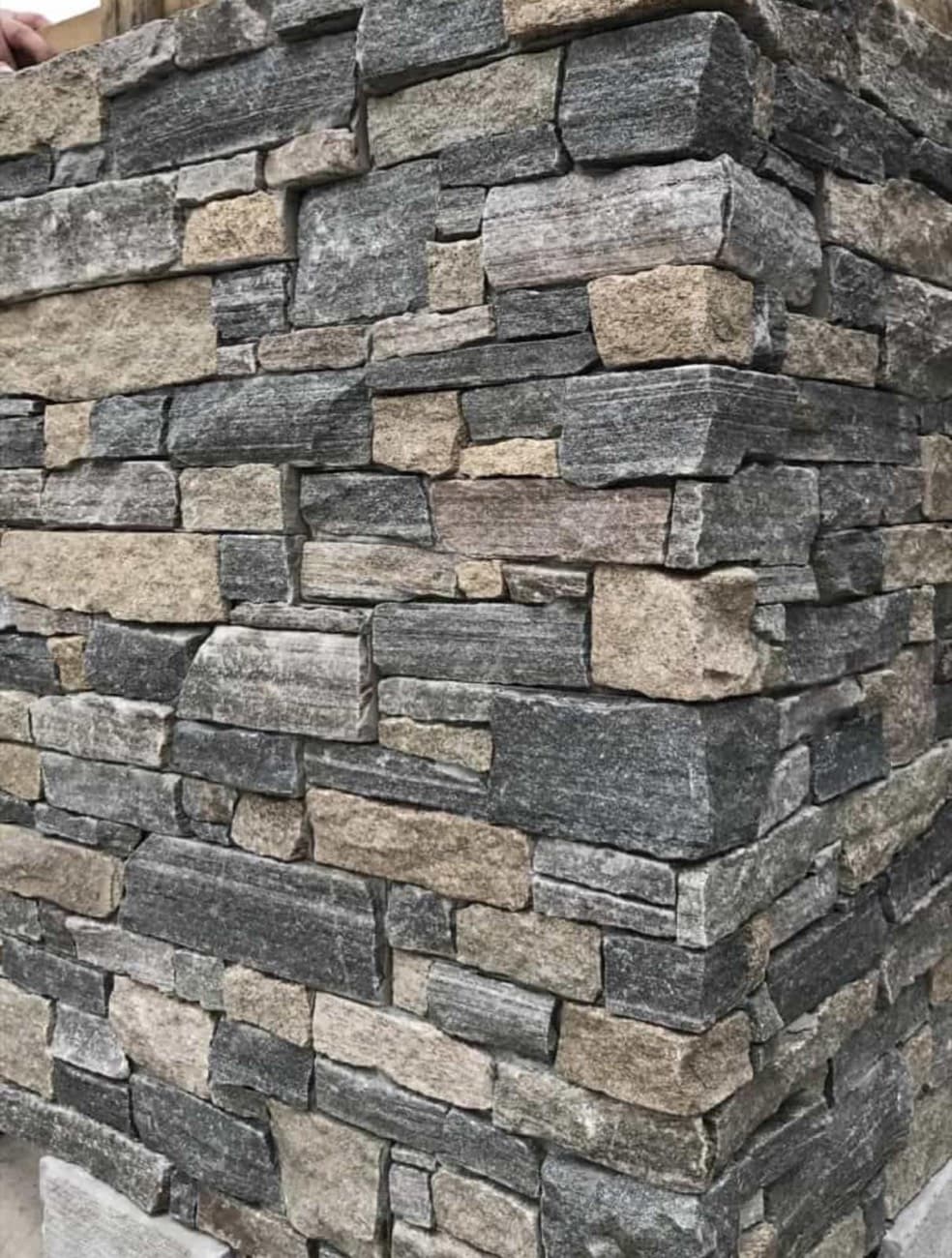
For a more traditional look, natural bluestone and granite are excellent, and fieldstone walls suit the older farmhouses and the more rural feel of parts of town. On the larger properties here, driveways are a common project, and paver driveways or a well-built base under asphalt both hold up when the prep is done right.
On budget, most paver patios in the Seekonk area land in the low-to-mid five figures depending on size, access, and how much grading and drainage the site needs, natural stone runs higher, and driveways are priced by square footage and prep. Those are typical market ranges and not a quote for your project. Use them as a rough guide and get an estimate before you plan a budget around a number.
Permits and choosing a contractor
In Seekonk, a simple ground-level patio or walkway often does not require a permit, but retaining walls above a certain height, structural work, and projects near property lines or wetlands typically do, and with the town's more open, semi-rural land, wetland and conservation setbacks come up in the right spots. The Seekonk building department is the authority, so confirm before you dig instead of guessing. A local contractor should know when a permit applies and pull it for you.
When comparing contractors, ask about what happens under the surface. How deep is the excavation? How is the base compacted? How are they handling drainage across your lot, especially on a larger open property where runoff travels? Those answers tell you whether you are hiring someone who builds to last.
In Massachusetts, ask about registration and verify it, get the full scope and materials in writing, and make sure whoever quotes you has walked your yard. At Levi Construction I am on the site myself, the estimate is free, and Seekonk is an easy reach from our base, so we can come read your specific property before you commit.
Frequently asked questions
- What hardscape works best on a larger Seekonk lot?
- Open Seekonk lots, especially in North Seekonk, are well suited to full backyard patios, long walkways, generous driveways, and freestanding stone walls. The advantage is space, so the focus shifts to using the yard well and connecting the areas. The key is planning the layout and the drainage so a big property does not send runoff toward a low patio.
- Do I need a permit for a patio or driveway in Seekonk?
- A simple ground-level patio or walkway often does not, but retaining walls over a certain height, structural work, and anything near property lines or wetlands usually do, and Seekonk has wetland and conservation setbacks in some areas. The Seekonk building department is the final word, so confirm before you start. A local contractor should know when a permit is required.
- Will a patio heave in Seekonk winters?
- Only if the base is wrong. Seekonk gets deep winter frost, and if the gravel base is too shallow or poorly compacted, frost heave pushes the surface out of level, and heavy clay soil that holds water makes it worse. A deep compacted base plus proper drainage away from the house is what prevents it, which is why we never skimp on the part you cannot see.
- How much does a paver patio cost in Seekonk?
- Most paver patios in this area fall in the low-to-mid five figures depending on size, access, and the grading and drainage needed, with natural stone running higher and driveways priced by square footage and prep. That is a typical market range, not a quote. Your actual number depends on your lot, so get a free estimate before budgeting.
Related services
Serving
Ready for an exact price?
Get a free, no-pressure in-home estimate. Real numbers for your home, not a phone guess.