
Hardscaping in Johnston, RI: A Local Homeowner's Guide
· By Airton da Silva Soares
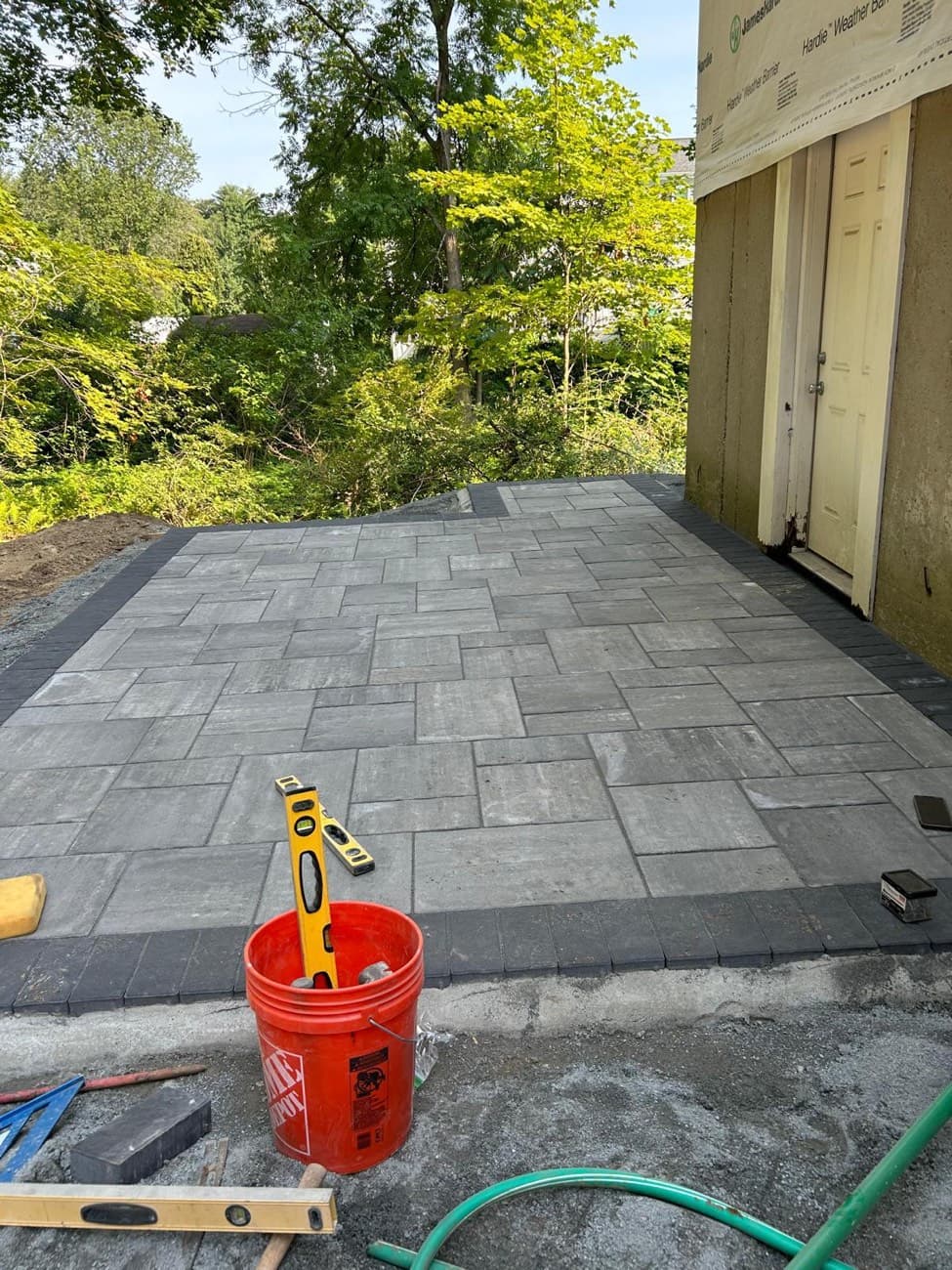
Johnston is home base for Levi Construction, and it is a town of contrasts. Around Thornton and the older village core near the Providence line, lots are tighter and streets are established. Head west and north toward Graniteville and the more rural stretches, and you get larger, wooded, and famously rocky lots. What works for a patio or wall in one part of town is not always right for another.
This guide is for Johnston homeowners in the planning stage. It walks through the neighborhoods and how they shape a project, the house styles here, the town's rocky soil and New England climate, the materials that hold up, and the permit and hiring basics.
It is informational, not a sales pitch. When you want real numbers for your property, Levi Construction gives free estimates right here in Johnston and across the rest of Rhode Island and Massachusetts.
Johnston neighborhoods and how they shape a project
Thornton and the eastern edge of town near the Providence line are the older, denser part of Johnston. Lots are more modest, homes sit closer together, and access can be tight. Compact paver patios, side walkways, and low garden walls make the most of these yards, and material sometimes has to be moved by hand where a machine cannot fit.
Move toward Graniteville, Simmonsville, and the more rural western and northern parts of town and the picture changes. Lots grow larger, often wooded and sloped, with more room for full outdoor living areas, longer driveways, and terraced designs. Machine access is usually easier, though the ground itself is a bigger challenge, which the next section explains.
The central corridor along Hartford Avenue and around Manton has a mix of established subdivisions and workable yards. Wherever you are in Johnston, the amount of ledge and stone in the ground is a defining factor in how a project gets built.
House styles in Johnston and the hardscape that fits
The older homes near Thornton and the village core, including Capes, Colonials, and bungalows, suit natural stone and traditional brick-style pavers. These materials echo the age of the homes and give a grounded, established look.
Much of central Johnston is filled with mid-century ranches, split-levels, and raised ranches. Clean concrete pavers in warm, neutral tones complement these homes and give a durable, easy-care surface for a family backyard without looking fussy.
The larger colonials and newer homes on the bigger western lots can carry more ambitious designs: expansive patios, terraced walls that work with the slope, and large-format pavers. With wooded, rolling ground, the hardscape often has to shape the land as much as decorate it, so retaining walls frequently become part of the plan.
Johnston soil, ledge, and the New England climate
Johnston sits on some of the rockiest ground in the area, and the name Graniteville is not an accident. Excavation here regularly hits large stone, cobbles, and even ledge, which affects how deep a base can go and how a project is staged. It is one of the reasons a knowledgeable local crew matters more here than in a town with easy digging.
Drainage on the larger sloped lots to the west is a real design factor. Water runs downhill toward homes and low spots, so grading, and often a retaining wall or drain line, has to be part of the plan. On the tighter eastern lots, flatter ground can hold water, so pitch and a permeable base keep patios from staying wet.
The freeze-thaw cycle is the same across town and it is relentless. Repeated freezing and thawing lifts anything on a shallow or poorly compacted base, and building over rocky subsoil without a proper gravel base invites uneven settling. A deep, well-compacted base and correct joint material are what let a Johnston patio survive winter flat.
Materials that hold up well in Johnston
Concrete pavers are the go-to for Johnston patios and walkways. They flex with the freeze-thaw cycle rather than cracking, they suit both older and newer homes with their range of colors, and any section that settles over rocky ground can be lifted and reset without redoing the whole surface.
Natural stone, especially granite and fieldstone, is right at home in a town literally built on it. It is extremely durable and pairs beautifully with the older homes near the village core, and granite and fieldstone are the traditional materials for the stone walls and terraced walls so many Johnston lots need.
For the sloped western lots, segmental retaining wall block is engineered to handle soil and frost pressure and is often the practical choice for holding grade, while natural stone gives a more traditional face. Under any surface, the compacted gravel base and edge restraint are what keep everything stable over rocky, uneven ground.
Permits and choosing the right crew
Whether a Johnston project needs a permit comes down to scope. Simple at-grade patios and walkways often do not, but retaining walls over a certain height, work near property lines, and anything affecting drainage or a public way usually do. On the larger rural lots, walls are common enough that permits come up often. Check with the Johnston building department before you start, and a good contractor will help you work through it.
When choosing a crew, pay attention to whether they talk about excavation, base preparation, and drainage, since in a town this rocky those are exactly where projects succeed or fail. A crew that knows Johnston ground plans for the ledge and stone instead of being surprised by it. Ask to see local projects and how they have held up.
Levi Construction is based right here in Johnston and owner-operated, with Airton on the job site himself. Six years focused on masonry and hardscape across Rhode Island and Massachusetts, on some of the rockiest ground in the state, means each project is built for exactly these conditions. Free estimates are available whenever you want to walk your yard.
Frequently asked questions
- Is Johnston soil really that rocky?
- Yes. Johnston sits on some of the rockiest ground in the area, and excavation regularly hits large stone, cobbles, and even ledge. That affects how deep a base can go and how a project is staged, which is why a crew that knows the local ground matters here.
- Do I need a permit for a patio in Johnston?
- It depends on scope. Simple at-grade patios and walkways often do not require one, but retaining walls over a certain height, work near property lines, and projects affecting drainage or a public way usually do. On larger rural lots, walls come up often. Confirm with the Johnston building department before starting.
- Why do larger Johnston lots so often need retaining walls?
- Many western and northern lots are wooded and sloped, so water runs downhill toward homes and low spots. Retaining walls hold grade, create usable flat space, and manage that runoff, which makes them a common part of hardscape plans on rolling ground.
- What patio material works best in Johnston?
- Concrete pavers are the most practical for most homes because they flex with freeze-thaw and can be reset if a section settles over rocky ground. Natural stone like granite and fieldstone suits the older homes and the town's stone-rich character. Either way, a deep, well-compacted base is what keeps the surface stable.
Related services
Serving
Ready for an exact price?
Get a free, no-pressure in-home estimate. Real numbers for your home, not a phone guess.